
When to Use bActivate for Problem Mares
In short. bActivate is for the mare that stays empty despite normal cycles, a fertile stallion and a clean swab. The strongest signs are two or more failed cycles, uterine fluid on ultrasound, early embryo loss, a previous endometritis, three or more foals, and age 12 or older. In the field series, 83 % of 64 problem mares at Hagyard and 16 of the 18 covered mares at Kildangan became pregnant after activation and treatment; neither series had a placebo group. The whole activation protocol fits inside one estrus cycle, so the earlier in the season, the better.
bActivate, a diagnostic aid for the problem mare
bActivate can help establish a correct diagnosis in the chronically infected mare. bActivate initiates growth of resident dormant streptococci, which can then be diagnosed and treated by standard techniques.
Veterinarians call this condition subclinical endometritis, latent uterine infection or dormant endometritis. To the breeder it is the barren mare or the empty mare: covered on time, with good semen, and still not in foal.
The record reads the same in every breeding forum: an older mare or an older maiden mare, bred three or four cycles, often with frozen semen, fluid after breeding, flushed with saline and oxytocin, a course of Regumate (altrenogest), culture and cytology came back clean, and she still did not take. Nothing in that record rules out a dormant infection. In a direct comparison, swab culture found 34 % of infected mares and biopsy culture 82 % (Nielsen 2005). Ask your vet, or a repro vet, for an activation culture before the next cover.
Chronic infections prevent establishment of a pregnancy, and might also increase the risk of early fetal loss and abortion in the mare. In our field series, 47% (Hagyard, 30 of 64) to 84% (Kildangan, 16 of 19) of mares still not pregnant at the end of the season, despite fertile stallions and veterinary supervision, were activation-positive for a dormant infection.
Some farms use bActivate as a screening tool to improve diagnosis of endometritis and treatment on all open mares during the off-season, hereby optimizing chances to establish a pregnancy and reduce time to pregnancy.

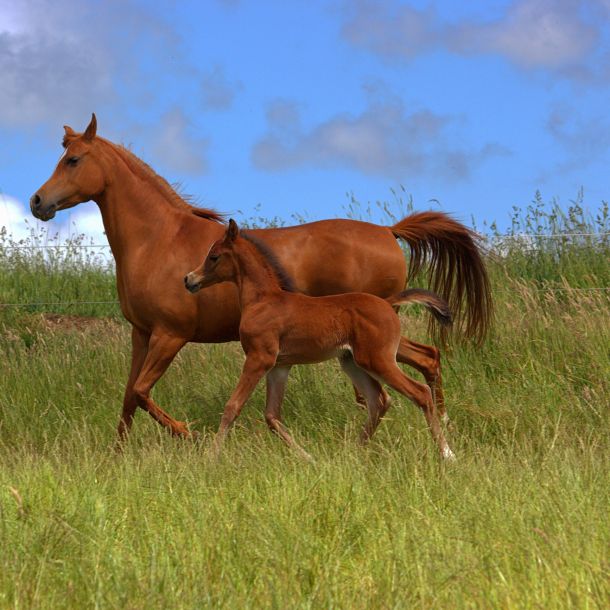
Repeated uterine infections indicate compromised uterine defense mechanisms predisposing for establishment of infections, acute as well as chronic. As chronic infections can be hard to identify bActivate should be considered for this group of problem mares.
Endometrial fibrosis is induced by ongoing endometrial inflammation. Presence of beta-hemolytic streptococci within the endometrium is expected to induce endometrial inflammation, hereby increasing uterine fibrosis, and consequently decreasing fertility. If endometrial fibrosis can be minimized the number of foals each mare can produce in a lifetime is expected to increase.
Biofilm and dormant reservoirs: Streptococcus zooepidemicus can shelter in a biofilm on the surface of the endometrium and slip into a dormant state deeper in the tissue. Breaking up the biofilm treats the surface but leaves the dormant reservoir untouched, which is why a mare can improve after biofilm treatment and then fail again the following season. Read more about why breaking up the biofilm is not enough.
Is my mare at risk of a dormant infection? The checklist
Activation culture with bActivate is for the problem mare: normal cycles, good timing, good semen, a clean culture and cytology, and still empty. Within that group, some mares are much more likely to carry a dormant infection than others. These are the signs, why each one counts, and what to ask the vet.
| Sign | Why it counts | What to ask the vet |
|---|---|---|
| 12 years or older | The lining clears bacteria less well with age. The mares in the Kildangan series averaged 12.7 years. | An activation culture with bActivate before the next cover, even if the swab is clean. |
| Three or more foals | Each pregnancy stretches the uterus. In older, multiparous mares it sinks below the pelvic brim, so fluid and bacteria drain less well. | A scan for fluid after covering, and an activation culture with bActivate if she stays empty. |
| A previous endometritis | A mare that has been infected once has shown she clears poorly. Streptococcus zooepidemicus can stay behind in a dormant state that a swab does not find (Petersen 2015). | An activation culture with bActivate before she is treated again on a clean swab. |
| Fluid in the uterus after covering | Fluid that is still there two or three days after covering is the classic sign of delayed clearance, and the most common finding in a mare that comes back empty. | A culture and cytology, and an activation culture with bActivate if they are clean. |
| Early pregnancy loss | An inflamed lining cannot hold an embryo, and a dormant infection keeps the lining inflamed without showing on the swab. | A check of the uterus that reaches deeper than the swab before she is covered again: a biopsy or an activation culture with bActivate. |
| Two or more failed cycles | With good timing and proven semen. When the breeding has been right twice, the cause is with the mare. The mares in the published series had been empty for three or more cycles. | An activation culture with bActivate in the next early estrus. |
Any one is enough to ask. Prof. Anders Miki Bojesen, who developed bActivate with Dr. Morten Rønn Petersen, names three that each put a mare in the high-probability group on their own: age 12 or older, three or more foals, and a previous endometritis or abortion.
If she has one or more of the signs and the swab is clean: ask for an activation culture with bActivate in her next early estrus. The vet instills 10 ml, takes a normal swab 48 hours later, and treats according to the sensitivity test if anything grows. She is covered in the following cycle.
If she has none and has failed one cycle: check the timing and the semen first. Most of these mares get in foal on the next cycle.
What to say to the vet: "My mare is [age], has had [number] foals, her culture and cytology are clean, and she is still empty. Can we do an activation culture with bActivate in her next early estrus?"
Prefer to answer the questions one at a time? Take the 2-minute assessment. bActivate is a prescription veterinary product; your veterinarian assesses suitability from the reproductive history, the examination and the scan.
Next step: how to get bActivate for your mare
1. Ask your vet. Activation culture is done by your own veterinarian, in the mare's next early estrus. If you want to say it in one sentence:
"My mare is [age], has had [number] foals, her culture and cytology are clean, and she is still empty. Can we do an activation culture with bActivate in her next early estrus?"
If your vet has not used it before, the protocol is on how to use bActivate.
2. What it costs. Order online, or through Hagyard Pharmacy and Midwest Veterinary Supply, which set their own prices. One vial is one activation for one mare. The vet's own fees for the visit, the cultures and any treatment come on top.
3. Where to buy it. Your vet orders it, or you order it for your vet.
| Where you are | Where to get it |
|---|---|
| United States | Hagyard Pharmacy, Midwest Veterinary Supply, or online |
| United Kingdom | Nupsala |
| Netherlands | Grovet |
| Denmark | proVET Nordic |
| Rest of Europe | Online from the manufacturer, shipped from Copenhagen |
| Australia | Scone Equine Hospital |
| Anywhere else | Write to us |
Addresses and phone numbers: our distributors.
Plan it one cycle ahead. Activation and any treatment happen in one cycle, and the mare is covered in the following one, so the earlier in the season, the better.
Which Mares Benefit Most?
Dormant streptococcal infections can affect mares across all breeds and ages, but certain groups are disproportionately represented in clinical case populations.
Older Broodmares
Uterine defence mechanisms decline with age and parity. Mares aged 12 or older, or with three or more foals, have reduced mucociliary clearance and lymphatic drainage, making them more susceptible to persistent infection. Clinical studies include a significant proportion of older mares with long histories of infertility.
Thoroughbred & Sport Horses
High-value thoroughbred and warmblood mares where the economic cost of a missed season is significant. The Kildangan/Godolphin study demonstrated an 89% pregnancy rate (16 of 18 covered mares, no placebo group) in barren thoroughbred problem mares after a single bActivate activation cycle followed by targeted antibiotics from the stud vet.
Repeat Breeders
Mares that cycle normally, accept covering, and produce embryos that consistently fail to implant. The inflammatory environment created by dormant Strep zoo prevents uterine preparation for implantation even when the embryo itself is viable.
When in the Breeding Season to Use bActivate
The bActivate protocol is designed to fit within a normal breeding cycle. Activation and the follow-up veterinary treatment take place approximately one cycle before the intended breeding cycle.
Total time from bActivate administration to breeding-ready: 3-4 weeks. This fits within a standard 21-day estrous cycle, meaning a single activation cycle before the target breeding cycle.
Off-Season Screening
Some breeding operations use bActivate as a proactive screening tool for all open mares at the end of the season or during the winter off-season. This approach offers several advantages:
- ✓Identifies chronic infections before the next breeding season begins
- ✓Allows a full treatment and recovery cycle without time pressure
- ✓Reduces time to pregnancy at the start of the next season
- ✓Minimises wasted covering cycles on untreated infections
- ✓Particularly valuable for high-value mares where early-season pregnancy is economically important
- ✓Helps farms plan breeding schedules with greater confidence
A dormant infection found in the off-season can be treated before the first cover of the next season, which is what off-season screening with bActivate is for.
The concept behind bActivate (promoting bacterial-activation) was discovered by Morten Rønn Petersen, DVM, PhD and Professor Anders Miki Bojesen, DVM, PhD. They both have extensive experience with bacterial endometritis in mares and have published several scientific papers on the subject.
FAQ
Frequently Asked Questions
Common questions about problem mares, biofilm infections and bActivate activation.
Which mares are most likely to carry a dormant uterine infection?
Problem mares that are 12 or older, have had three or more foals, or have had endometritis or an abortion before. Fluid after covering, an early loss and two or more failed cycles with good timing also count. Any one of them is a reason to ask the vet for an activation culture with bActivate.
My mare is 12 and has had three foals, but her swab is clean. What should I ask the vet?
Ask for an activation culture with bActivate in her next early estrus. A clean swab does not rule out a dormant infection: in a direct comparison, swab culture found 34 % of infected mares and biopsy culture 82 % (Nielsen 2005).
When should bActivate be used on a problem mare?
bActivate is indicated for mares that have failed to conceive for two or more consecutive breeding cycles despite normal ovarian cycles, breeding to a fertile stallion, and negative routine uterine culture. It is also indicated when a mare shows signs consistent with uterine infection (uterine fluid on ultrasound, early embryo loss, irregular cycles) but standard swabs return negative results. Some practices use it as a screening tool for all open mares at the start of the off-season.
What are the signs that a mare has a hidden uterine infection?
The main signs are: failure to conceive despite multiple breedings to a fertile stallion, a negative routine uterine swab that does not explain the fertility failure, accumulation of uterine fluid visible on ultrasound around estrus, early embryo loss (days 14 to 25 after ovulation), and a history of two or more open seasons. These signs combined with a negative swab are the classic presentation of dormant subclinical endometritis caused by Streptococcus zooepidemicus in non-pregnant mares.
How many failed breeding attempts before trying bActivate on a non-pregnant mare?
Most veterinarians consider bActivate after two failed consecutive breeding cycles in a mare with no other identifiable cause. The Hagyard clinical study included mares barren for 3 or more consecutive seasons. In high-value mares or mares approaching the end of their breeding career, earlier investigation may be warranted. Some practices use bActivate as a routine diagnostic on all non-pregnant mares at the end of each breeding season.
Can bActivate be used on any non-pregnant mare or barren mare?
bActivate is intended for non-pregnant mares (also called barren mares or problem mares) suspected of having dormant subclinical uterine infections caused by Streptococcus equi subspecies zooepidemicus. It is administered by a veterinarian and is most appropriate for mares with unexplained fertility failure and negative routine cultures. It is not a first-line tool for mares with acute visible signs of infection such as purulent discharge or positive routine culture results.
Should bActivate be used before or after antibiotics?
bActivate should be used before antibiotics when the goal is accurate diagnosis. Administering antibiotics before bActivate may suppress bacterial reactivation and produce a false-negative post-activation culture. The correct protocol is: instil bActivate, obtain a post-activation culture 48 hours later, then begin targeted antibiotic therapy based on the culture result. The mare is not bred in the same estrus cycle but in the following one.
Is bActivate used instead of a standard uterine swab?
No. bActivate is used in addition to standard diagnostic procedures, not instead of them. The recommended protocol includes a pre-activation culture before bActivate instillation and a post-activation culture 48 hours later. Comparing the two cultures confirms whether dormant bacteria were present. bActivate does not replace routine culture but extends diagnostic accuracy to mares with dormant infections that standard culture would otherwise miss.
Can bActivate be used during the breeding season?
Yes. bActivate is designed for use during the active breeding season. It is administered during early estrus when the largest follicle is over 20 mm. The mare is not bred in that same estrus cycle. After a positive post-activation culture and appropriate antibiotic treatment, the mare is bred in the following cycle. In clinical studies this approach achieved an 83% pregnancy rate in problem mares that had previously failed to conceive.
Continue reading